MANAGING CAH
IS A BALANCING ACT1,2
These physicians have been compensated by Neurocrine for sharing their views.

Who May Benefit From CRENESSITY

CAH specialists discuss the range of patients they consider appropriate for treatment with CRENESSITY.


Balance is often elusive when treating with GCs alone3,4
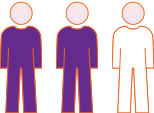
~2/3 of patients with CAH taking GCs have poorly managed androgen levels3,5,6

Based on 2 large retrospective studies totaling 443 patients with CAH. Data included children and adults. “Poorly managed” was defined as elevated androgen levels and oversuppressed androgen levels.5,6
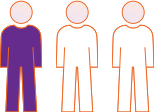
~1/3 of patients with CAH are treated for ≥1 cardiometabolic or bone comorbidity4

Based on a study of 244 patients with a median age of 33 years.4

In a multicenter study, the most common comorbidities in patients with CAH taking GCs included4:

  • Osteoporosis/osteopenia (59%)
  • Hyperlipidemia (23%)
  • Type 2 diabetes/hyperinsulinemia (22%)
  • Hypertension (14%)
Even when patients are well controlled clinically, high GC doses carry risks of long-term comorbidities. High GC doses are those that are higher than the physiologic range needed to treat adrenal insufficiency (above the physiologic range of 2-14 mg/m2/day or 5-25 mg/day in adults).1,7,8*
  • *The average physiologic GC dose for adults is 7.6 mg/m2/day HCe, not just the levels used acutely for conditions such as asthma (~160-200 mg/day HCe in adults, typically given as 40-50 mg/day prednisolone).7,8
Addressing excess androgens often requires high GC doses, but these doses can lead to many short- and long-term comorbidities.1,2
Symptoms of excess ACTH and adrenal androgens1,2,7,9-12:
  • Early puberty
  • Growth issues*
  • Fertility problems
  • TARTs/OARTs
  • Acne
  • Hirsutism
  • Hypertension*
  • Hyperlipidemia*
  • Obesity*
  • Anxiety and depression*
Comorbidities related to high GC doses1,2:
  • Obesity*
  • Growth issues*
  • Hypertension*
  • Insulin resistance
  • Hyperlipidemia*
  • Osteopenia and osteoporosis
  • Cognitive impairment
  • Mood disorders
  • Anxiety and depression*
  • Sleep disturbances

Symptoms of androgen excess and high-dose GC comorbidities can affect patients' quality of life.

  • *These impacts could be related to excess androgen, high GC doses, or both.7

A modified Delphi panel reached 100% consensus that a ≥2.5 mg/day (≥~1.4 mg/m2/day) reduction in GC dose is clinically meaningful, and 70% agreed that any reduction is clinically meaningful.13†‡

  • The 100% consensus reflects 10 of 10 endocrinologists surveyed.13
  • The 70% figure reflects 7 of 10 endocrinologists surveyed.13

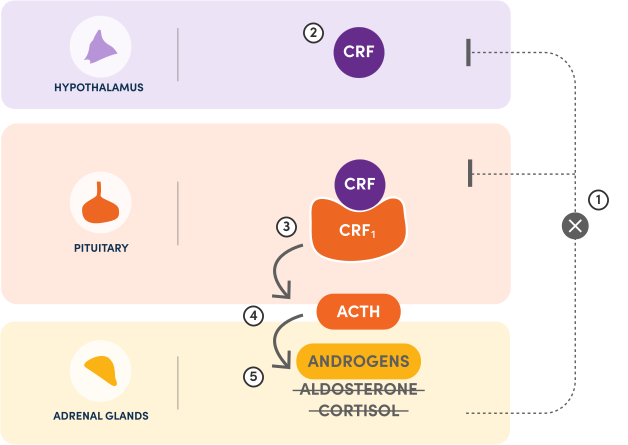
Cortisol deficiency in CAH drives dysregulation of HPA axis3,14

Cortisol deficiency leads to3,14:
Number 1 IconLoss of negative feedback in HPA axis
Number 2 IconIncrease in

 CRF 

secretion
Number 3 IconIncrease in

 CRF1

 receptor activation
Number 4 IconSystemic surges and constant elevation of ACTH
Number 5 IconOverproduction of

 adrenal androgens

Schematic showing how cortisol deficiency in CAH leads to androgen excess

95% of CAH cases are caused by 21-hydroxylase deficiency.12,15

Because of the 21-hydroxylase deficiency, the adrenal glands cannot make enough cortisol and, in many cases, aldosterone. Instead, they make excess androgens.3

With the introduction of CRENESSITY we have an effective tool that suppresses ACTH. With suppression of ACTH, we can suppress the adrenal androgens… So, I think it’s a really good development in this field.”

With the introduction of CRENESSITY we have an effective tool that suppresses ACTH. With suppression of ACTH, we can suppress the adrenal androgens… So, I think it’s a really good development in this field.”

Dr. Amrit BhangooPediatric EndocrinologistCompensated by Neurocrine for sharing his views.

All patients with CAH need physiologic GC doses to treat their cortisol deficiency; however, controlling androgens using only GCs inherently requires supraphysiologic dosing.7

ACTH=adrenocorticotropic hormone; CAH=congenital adrenal hyperplasia; CRF=corticotropin-releasing factor; CRF1=corticotropin-releasing factor type 1; GC=glucocorticoid; HCe=hydrocortisone equivalents; HPA=hypothalamic-pituitary-adrenal; MOA=mechanism of action; OARTs=ovarian adrenal rest tumors; TARTs=testicular adrenal rest tumors.

REFERENCES

INDICATION

CRENESSITY (crinecerfont) is indicated as adjunctive treatment to glucocorticoid replacement to control androgens in adults and pediatric patients 4 years of age and older with classic congenital adrenal hyperplasia (CAH).

CONTRAINDICATIONS

CRENESSITY is contraindicated in patients with hypersensitivity to crinecerfont or any excipients of CRENESSITY.

WARNINGS AND PRECAUTIONS

Hypersensitivity Reactions. A hypersensitivity reaction, including throat tightness, angioedema, and generalized rash, occurred in a subject after 3 days of treatment with CRENESSITY. If a clinically significant hypersensitivity reaction occurs, initiate appropriate therapy and discontinue CRENESSITY.

Risk of Acute Adrenal Insufficiency or Adrenal Crisis with Inadequate Concomitant Glucocorticoid Therapy. Acute adrenal insufficiency or adrenal crisis, which is potentially life-threatening, can occur in patients with underlying adrenal insufficiency who are on inadequate daily glucocorticoid doses, especially in situations associated with increased cortisol need, such as acute intercurrent illness, serious trauma, or surgical procedures. Continue glucocorticoids upon initiation of and during treatment with CRENESSITY. Do not reduce the glucocorticoid dose below the dose required for cortisol replacement. Patients should continue to use stress dosing of glucocorticoids in cases of increased cortisol need.

ADVERSE REACTIONS

In adult patients, the most common adverse reactions (at least 4% for CRENESSITY and greater than placebo) are fatigue, headache, dizziness, arthralgia, back pain, decreased appetite, and myalgia.

In pediatric patients, the most common adverse reactions (at least 4% for CRENESSITY and greater than placebo) are headache, abdominal pain, fatigue, nasal congestion, and epistaxis.

You are encouraged to report negative side effects of prescription drugs to the FDA. Visit MedWatch at www.fda.gov/medwatch or call 1-800-FDA-1088.

Dosage Forms and Strengths:

CRENESSITY is available in 50 mg and 100 mg capsules, and as an oral solution of 50 mg/mL.

Please see full Prescribing Information.